Where Can I See Caravaggio In Rome For Free?
The three churches that show Caravaggio paintings for nothing, which canvases sit behind paid tickets, and how the free first Sunday changes the maths.
Where Can I See Caravaggio In Rome For Free?
You can see Caravaggio paintings for free in three Roman churches: San Luigi dei Francesi near the Pantheon holds the Contarelli Chapel cycle, Santa Maria del Popolo holds the Cerasi Chapel Conversion and Crucifixion, and Sant'Agostino near Piazza Navona holds the Madonna dei Pellegrini. The Borghese and Barberini canvases are different: those sit in paid state galleries, free only on the first Sunday of the month.
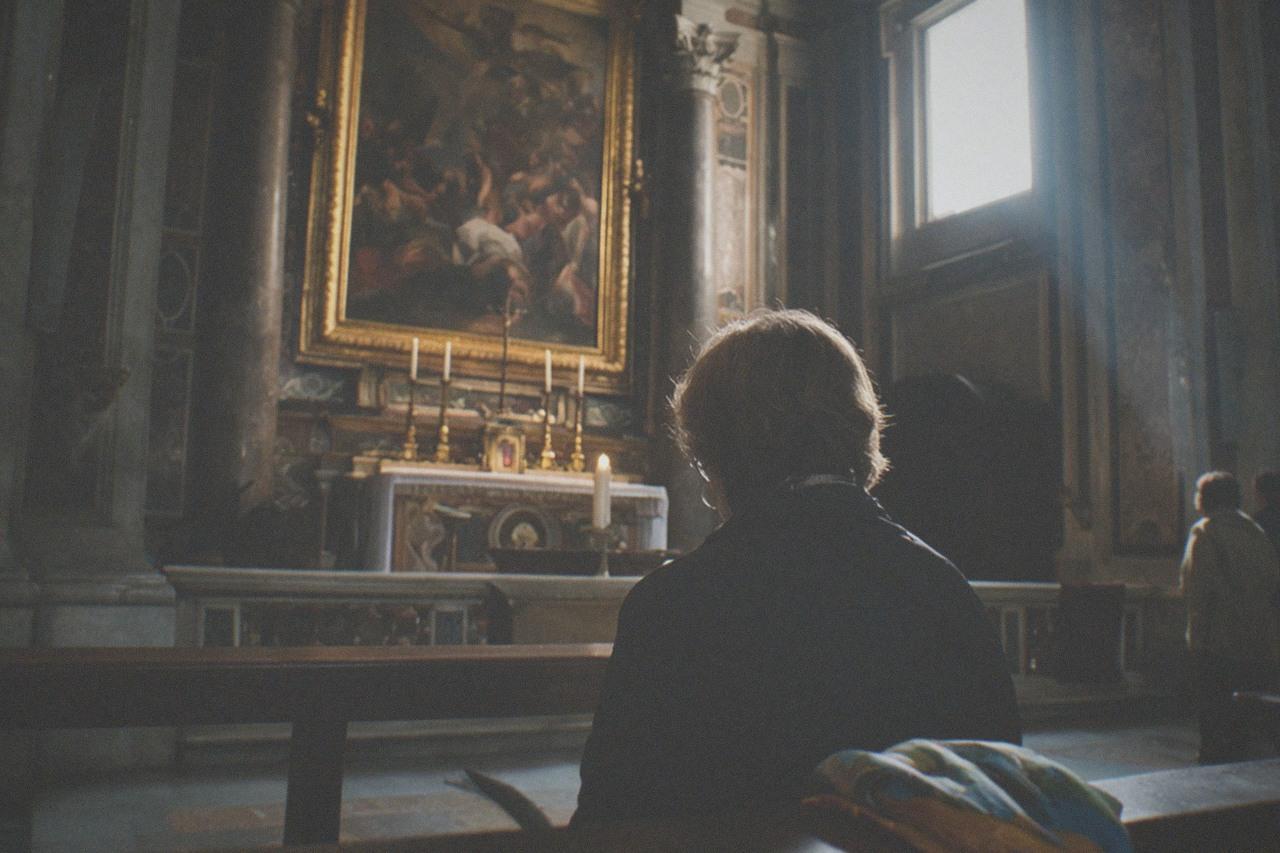
Rome is the city where Michelangelo Merisi, the man we call Caravaggio after his home town, did almost all of his important work. He arrived in the 1590s, quarrelled constantly, painted revolutionary canvases for churches that still stand within a short walk of each other, killed a man in 1606 and fled, and died four years later on a beach heading back to face a pardon that arrived too late. The paintings never moved. That is the quiet miracle for a visitor on a zero budget: the works that made his name are not locked in a museum behind a turnstile. They are in parish churches, above altars, in the light their creator designed them for, and the churches let you in for nothing.
The catch, and there is one, is that a church is a church. It has Mass times, narrow visiting windows and rules about behaviour that a museum never imposes on you. Get the timing wrong and you will stand in front of a locked door. Get it right and you get something no gallery can sell: a Caravaggio seen by candle-adjacent daylight, at the height and angle the congregation has seen it for four centuries.
The other catch is that Rome's Caravaggio holdings do not stop at the churches. Two of his most celebrated canvases hang in the Galleria Borghese, more in Palazzo Barberini and Galleria Corsini, all state museums with real ticket prices and one very useful free Sunday (see Borghese Free Sunday?). This page walks through both halves: what is free every day, and what is free once a month.
If you want the story stitched together rather than the paintings ticked off, there is a pay-what-you-want option too. The Caravaggio Mystery Walk, listed on GuruWalk, is an English-language tour rated 4.92 across 2,028 GuruWalk reviews, running about 2 hours and meeting at Piazza della Minerva 69, a stone's throw from the Pantheon and San Luigi itself. A local guide walks you between the sites while telling the murder-and-flight biography that the wall labels never give you.
Is The Contarelli Chapel At San Luigi Dei Francesi Really Free?
Yes, and the French national church says so in unusually blunt terms: no ticket is required to enter, the three Caravaggio paintings in the Contarelli Chapel are part of the nave, and the parish even publishes a free QR audio guide to the canvases themselves. There is no suggested donation, no coin slot and no booking system. You walk in during opening hours like any parishioner. One of the free walking routes passes through here: Caravaggio Mystery Walk, English.
The church sits between the Pantheon and Piazza Navona, on the narrow Via Santa Giovanna d'Arco, and the paintings it holds are the ones that made Caravaggio famous in his own lifetime. The Calling of Saint Matthew, The Inspiration of Saint Matthew and The Martyrdom of Saint Matthew hang in sequence in the Contarelli Chapel, the left-hand chapel as you face the altar. The Calling is the one most visitors come for: the hand of Christ pointing into a dim tax collector's den, the shaft of light doing the theological work, the shocked faces caught mid-reaction. When it was unveiled in 1600, contemporaries understood immediately that painting had changed.
The parish's own website answers the money question the way a tired priest would: it's a church, so it's free. No ticket required. That statement, plus the free QR audio guide aimed specifically at the Caravaggios, is on the parish's own site, which is the place to check current opening times before you go, since church hours in Rome shift with liturgical seasons.
Two practical notes make the difference between a good visit and a wasted walk. First, the chapel is small and the nave is darker than a gallery, so give your eyes a minute to adjust before judging the paintings. Second, this is an active national church with services; if you arrive during Mass you wait, quietly, and nobody owes you a viewing slot. Budget a slow half hour rather than a drive-by.
For readers planning a wider church crawl, the same free rule applies across the city's major basilicas and the pattern is worth understanding once. Our guide to Rome's free churches and their rules covers which ones publish hours, which have paid crypts bolted underneath, and how to read the difference.
What About The Cerasi Chapel At Santa Maria Del Popolo?
The Cerasi Chapel holds two Caravaggio paintings, The Conversion of Saint Paul and The Crucifixion of Saint Peter, and visiting the basilica is always free, in the parish's own published words. The catch is access: the chapel entrance is metered, photography inside it is forbidden, and the visiting windows are narrow, roughly two hours in the morning and two in the late afternoon on weekdays, with only a late-afternoon slot on Sundays and holidays.
Santa Maria del Popolo stands right beside Piazza del Popolo, at the northern gate of the old city, and it packs more per square metre than almost any church in Rome: two Caravaggios in the Cerasi Chapel, a Caravaggio rival, Annibale Carracci, on the altar wall facing them, and two early Raphael paintings in the Chigi Chapel a few metres away. The Conversion on the Cerasi Chapel floor, a fallen horse and a sprawled Saul lit from above, is the painter at his most radical: the divine event happens in a stable, to a soldier, in the dirt. One of the free walking routes passes through here: Villa Borghese, English, Two Hours.
The rules are the parish's own, published on its conditions-for-visits page. The basilica is always free to visit; the Cerasi Chapel is an exception in flow, not in price. Guides must use a microphone and avoid long stops, visits are barred during Mass, and the weekday windows are 08:30-09:45 and 10:30-12:00, then 16:00-18:00, with Sundays and holidays limited to 16:30-18:00. Miss the window and the rest of the church is still open, but the two canvases you came for sit behind a low barrier you will not cross.
Plan the day around that schedule rather than hoping. A morning visit pairs naturally with a walk down through the historic centre toward the Pantheon, which puts the Cerasi pair and the Contarelli trio in one free morning with a coffee in between. An espresso at the bar in Rome province averaged EUR 1.19 in 2026, so the fuel for the whole art crawl costs less than a museum cloakroom fee. This stop sits on a free walking route, 11 Spots, 2 Hours 45.
If the biography is what draws you to these two chapels rather than the brushwork alone, the guided option covers both. The Caravaggio Mystery Walk, the pay-what-you-want GuruWalk tour mentioned above, is built around exactly this route and the police-record version of the painter's life: the brawls, the libel trial, the killing of Ranuccio Tomassoni, the flight south. It is rated 4.92 across 2,028 GuruWalk reviews, runs about 2 hours in English, and meets at Piazza della Minerva 69.
Which Caravaggio Paintings Are Behind Paid Tickets?
The Galleria Borghese holds Boy with a Basket of Fruit and Sick Bacchus among other works, Palazzo Barberini holds Judith Beheading Holofernes, and Galleria Corsini holds a Saint John the Baptist. All three are state museums with standard tickets, and all three are free to everyone on the first Sunday of the month under the Domenica al Museo scheme, with one exception: the Galleria Borghese charges a compulsory EUR 2 booking fee even on its free Sunday.
The division is clean once you see it. The church paintings are free every day; the gallery paintings are free one day a month. The Ministry of Culture's national scheme opens state museums, monuments and archaeological parks to everyone on the first Sunday of each month, and the Rome list confirmed on the Ministry's own pages includes the Galleria Borghese, Palazzo Barberini with Galleria Corsini, the Colosseum, the Roman Forum and Palatine, the Pantheon, Castel Sant'Angelo and the Baths of Caracalla. The wider set of guides lives on Free Things To Do In Rome. One of the free walking routes passes through here: Colosseum Walk, Bilingual, 1 Hour 45.
The Borghese wrinkle deserves its own sentence because almost every listicle gets it wrong. Booking at the Galleria Borghese is mandatory every day of the year, and the official price list shows the first-Sunday ticket as free admission plus a EUR 2 reservation fee that is not waived. Calling it simply free on the first Sunday would be false. Calling it a EUR 2 visit with a compulsory reservation is exact.
There is also a standing free rule that works any day of the month and applies to every nationality. The Ministry's concessions page states that entry to state museums and archaeological sites is free for visitors who have not yet turned eighteen, with no nationality condition attached: an American, British or Japanese fifteen-year-old is free on exactly the same terms as an Italian one. The famous EUR 2 reduced rate for eighteen to twenty-five year olds is different, and it is explicitly an EU-citizen rate, extended to non-EU citizens only where reciprocity applies, so a non-EU visitor in their twenties should not bank on it. The Ministry sets these rules out on its own concessions page.
| Where | What you see | Cost on a normal day | Free route |
|---|---|---|---|
| San Luigi dei Francesi | Contarelli Chapel: Calling, Inspiration and Martyrdom of Saint Matthew | Free, no ticket | Any opening hour |
| Santa Maria del Popolo | Cerasi Chapel: Conversion of Saint Paul, Crucifixion of Saint Peter | Free, chapel access metered | Within the published visiting windows |
| Galleria Borghese | Boy with a Basket of Fruit, Sick Bacchus and others | Paid, compulsory reservation | First Sunday, still EUR 2 booking fee |
| Palazzo Barberini | Judith Beheading Holofernes | Paid | First Sunday of the month |
| Galleria Corsini | Saint John the Baptist | Paid | First Sunday of the month |
One more caution that the Ministry itself publishes: free entry never automatically includes a temporary exhibition. A show mounted inside a site can charge even visitors who entered the permanent collection for nothing. Check the exhibition calendar before promising yourself a free afternoon.
The first Sunday also opens the ancient sites, which is where a different kind of walk earns its place. The Colosseum's free Sunday works on first-come tickets handed out at the Piazza del Colosseo ticket office, with no online booking, and the free ticket excludes the arena floor, the underground and the upper levels. If you are pairing a free Borghese morning with the ancient city in the afternoon, the Colosseum Walk on GuruWalk, a bilingual English and Spanish tour rated 4.88 across 1,463 GuruWalk reviews, runs about 1 hour 45 minutes from Piazza dei Calcarari and explains the amphitheatre without needing the paid add-ons at all.
For the full mechanics of the monthly free day, including which sites need booking and which hand out tickets on site, our guide to Rome's free Sundays goes site by site.
Can You See Caravaggio At The Vatican For Free?
No Caravaggio paintings hang in the Vatican Museums or St Peter's Basilica, so the Vatican's free routes do not apply to this hunt. The Vatican Museums are free on the last Sunday of the month, 09:00 to 14:00 with last entry 12:30, and St Peter's Basilica is free every day, but neither holds a canvas by him. The Vatican's relevance here is biographical: it was papal Rome that commissioned, prosecuted and eventually pardoned him.
That said, the Vatican half of the city is where the Caravaggio story keeps bumping into the art of his rivals and heirs, and plenty of visitors combine the two. The Vatican's own small-group walking tour on GuruWalk, rated 4.89 across 160 GuruWalk reviews and running about 1 hour 30 in English, covers St Peter's Square and the basilica's history; it pairs well with a morning at the free last-Sunday museums if your dates line up, though you should expect the free Sunday queue to be long because no ticket can be reserved in advance for it.
The basilica itself is free of charge, in the basilica's own words, and only visitors who want a guaranteed time slot pay for the booking that includes an audio guide. The dome climb is a separate ticket. The dress code is published and enforced: long trousers for men, skirts below the knee or trousers for women, shoulders covered for everyone.
For the Caravaggio hunter, the useful Vatican fact is negative but saves a wasted trip: do not cross the river expecting his brushwork there. His Rome is the left bank of the Tiber, the Pantheon quarter, Piazza del Popolo and the Borghese hill. The Vatican's free treasures belong to a different itinerary. One of the free walking routes passes through here: Bilingual Center Walk, 2 Hours 15.
How Much Does A Pay-What-You-Want Caravaggio Walk Actually Cost?
The guiding itself costs nothing up front, because GuruWalk tours are free to book and you pay the guide what you choose at the end. GuruWalk's own Rome guidance puts typical tips at 10 to 20 euros per person for its Rome walks, with some walkers leaving up to 50, and a Rome operator independently publishes the same 10 to 20 euro range for two to three hour tours, calling 5 euros acceptable on a tight budget.
That makes the arithmetic simple. A self-guided crawl of the three free churches costs nothing but the coffee. A guided Caravaggio walk costs whatever you decide it was worth after two hours of standing in front of paintings while someone explains why the light falls where it does. Travellers posting in recent Rome threads report tipping 10 to 15 euros per person on these walks, with couples sometimes leaving 30 to 40 euros total, which squares with the platform's own guidance.
The Caravaggio Mystery Walk is the obvious candidate for this article's readers: English language, about 2 hours, rated 4.92 across 2,028 GuruWalk reviews, meeting at Piazza della Minerva 69. Because it is pay what you want, the decision to book carries no financial risk; the only commitment is showing up on time.
One warning worth carrying in Rome generally, and it is not a scare story but a documented one. Roman police have repeatedly fined unlicensed guides in the tourist core, including a 2025 case near the Pantheon involving a fake guide badge and a 4,000 euro fine. Since 2023 Italian law requires tourist guides to be inscribed on a national register, and from August 2026 registered guides can carry a photo badge with a QR code you can verify yourself. A guided walk booked through a named platform with a review history is the low-friction way to know your guide is the real thing. This stop sits on a free walking route, Two-Hour Highlights Walk.
Common Questions About Seeing Caravaggio In Rome For Free
Where Can I See Caravaggio In Rome For Free?
In three churches that charge no entry: San Luigi dei Francesi for the Contarelli Chapel cycle, Santa Maria del Popolo for the Cerasi Chapel pair, and, on the paid side of the ledger, the Galleria Borghese, Palazzo Barberini and Galleria Corsini, which are free to everyone on the first Sunday of the month. The church paintings are free every day the doors are open.
Is San Luigi dei Francesi free to enter?
Yes. The French national church requires no ticket and publishes a free QR audio guide to its Caravaggio paintings. You simply walk in during opening hours, though you should check the parish site for current times and avoid arriving mid-Mass.
Can you photograph the Caravaggios in Santa Maria del Popolo?
No. The parish forbids photography and filming inside the Cerasi Chapel specifically, and access to the chapel is metered. The basilica itself is always free to visit, but only within its narrow published windows.
Is the Galleria Borghese free on the first Sunday?
Admission is free, but booking is compulsory every day and the EUR 2 reservation fee still applies, so the visit costs EUR 2 and must be reserved. Calling it simply free would be wrong.
Do children get into the paid Caravaggio galleries free?
Yes. The Ministry of Culture states that visitors under eighteen enter state museums free with no nationality condition, so a child of any passport enters the Borghese, Barberini and Corsini free on any day, not just the first Sunday.
How much should you tip on a free Caravaggio walking tour?
GuruWalk's own Rome guidance puts typical tips at 10 to 20 euros per person, with some walkers leaving up to 50. A Rome operator publishes the same range for two to three hour tours and calls 5 euros acceptable on a tight budget.