What Is The Golden Hour In Rome?
Rome's golden hour transforms the city for a short, free window every evening. Learn when it happens and the best free viewpoints to catch it.
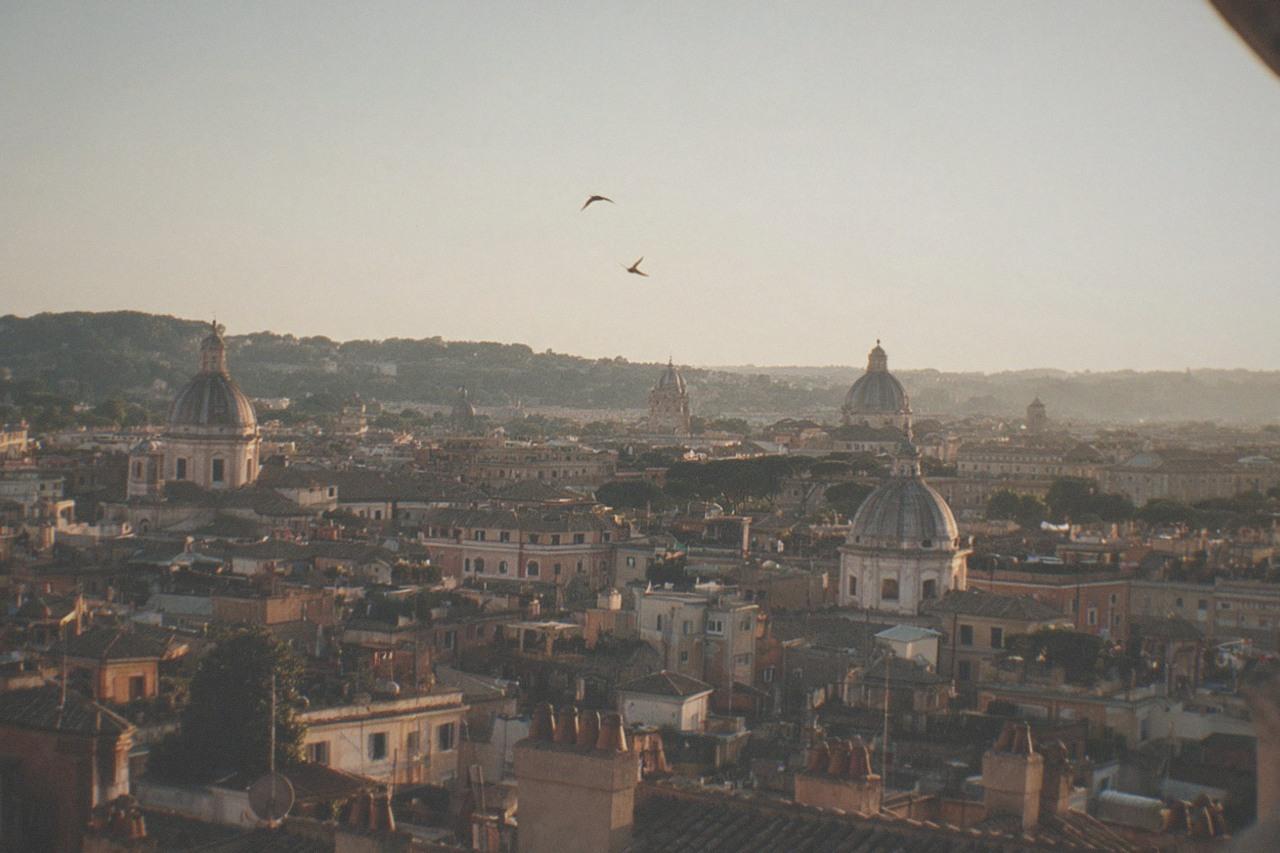
Rome's latitude of 41 degrees 53 minutes north is the real reason its evening light gets talked about so much. The sun's shallow angle at dusk stretches long rays across the city and catches every cornice, every dome and every cobblestone the municipal lighting never illuminates quite the same way. The golden hour is the last sixty minutes before sunset, a window that shifts by more than four hours between December and June because of where Rome sits. No ticket is sold for it. No turnstile guards the viewpoint. It is one of the few things in this city that remains genuinely, unconditionally free.
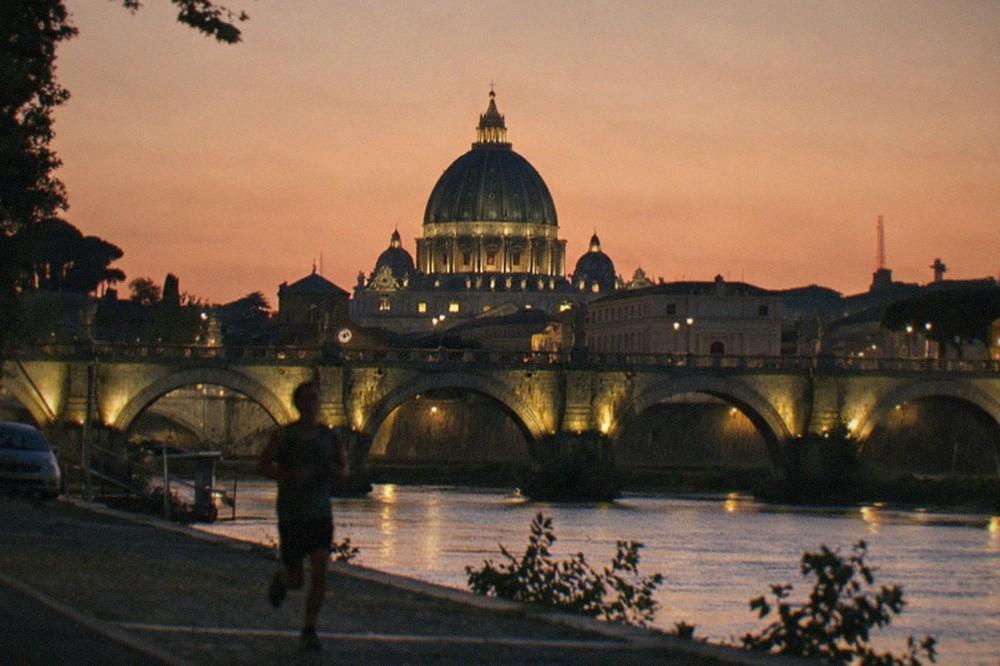
What Is The Golden Hour?
The golden hour is the period of soft, diffuse daylight that begins roughly an hour before sunset and ends when the sun drops below the horizon. In Rome the effect is more striking than in northern cities because the low angle of the light across travertine, brick and marble turns the whole centro storico the same warm honey colour within minutes.
The golden hour is photography's most common term for it, but its formal name in lighting is the final portion of civil twilight. What makes Rome's version special is the city's palette: travertine, tufa, brick and marble all warm into the same tone within a few minutes of each other. That does not happen in cities where the stone is grey or the sky stays white. The low-angle light scatters away the blue end of the spectrum and leaves only the warm wavelengths, which is why everything looks lit from within.
In Rome the effect is intensified by the number of domes and bell towers that break the horizon line. San Pietro, the cupolone of the Vatican, the twin churches of Piazza del Popolo and even the modern travertine of the Ara Pacis enclosure all catch the light from slightly different angles. The result is a city that changes colour street by street, and because the centro storico is almost entirely a pedestrian-scale tangle, you can walk from one pool of gold into another in under a minute.
| Date | Sunset (CEST) | Day length | Golden hour roughly |
|---|---|---|---|
| 21 June 2026 | 20:48 | 15h 13m | 19:50 to 20:50 |
| 22 September 2026 | 19:07 | 12h 10m | 18:10 to 19:10 |
| 21 December 2026 | 16:41 | 9h 7m | 15:40 to 16:43 |
| 20 March 2026 | 18:22 | 12h 9m | 17:20 to 18:24 |
The table above gives the sunset and approximate golden-hour band for four seasonal markers in 2026, derived from the sunrise and sunset ephemeris published by timeanddate.com for Rome. No official body in Italy issues a golden-hour timetable. The spread between a December golden hour and a June one is more than four hours, so the season you visit decides whether you will see Rome turn gold over an early dinner or over a late aperitivo.
When Does The Golden Hour Happen In Rome?
In Rome the golden hour happens roughly fifty to sixty minutes before sunset every day, because the sun's path and the city's latitude never change. Italian summer time moves the clock one hour forward from late March to late October, so the clock face of the golden hour shifts with it.
Rome's official coordinates, published by Roma Capitale, are 41° 53′ 30″ N, 12° 30′ 40″ E. That latitude means the sun's path through the sky is relatively steep in summer and shallow in winter, which is why the June day lasts 15 hours and 13 minutes while the December day runs only 9 hours and 7 minutes. The golden hour tracks the sunset, and the sunset moves.
Daylight saving in 2026 starts on 29 March and ends on 25 October, following the EU directive that has not been abolished despite years of debate. That pushes June sunsets to nearly 21:00 and pulls December sunsets back to 16:41. The golden hour in mid-June therefore runs in the 20:00 range, a time when the city's restaurants are only just filling and the piazzas are still warm. In December the same window lands around 15:40 to 16:40, and the quality of the light is different: lower, colder and quicker to fade into blue.
Roma Capitale publishes Villa Borghese's hours as "aperto dall'alba al tramonto", dawn to sunset, which means the gates close roughly in step with the golden hour. Villa Celimontana is published with a similar dawn-to-sunset rhythm, and Villa Aldobrandini is listed as open from 07:00 to sunset. The Pincio terrace inside Villa Borghese stays free and open as long as the park itself does, so timing a visit to catch the last thirty minutes before the gates shut is the best way to see the dome of San Pietro catch fire while standing inside one of Rome's largest free green spaces. One of the free walking routes passes through here: Villa Borghese, English, Two Hours.
Best Free Places To See The Golden Hour In Rome
Rome's best free golden-hour viewpoints are the Gianicolo belvedere, the Terrazza del Pincio, the Giardino degli Aranci on the Aventine and the keyhole at Piazza dei Cavalieri di Malta. All four are un-ticketed public spaces with published hours or, in the Gianicolo's case, no hours at all, because Roma Capitale lists it as sempre accessibile.
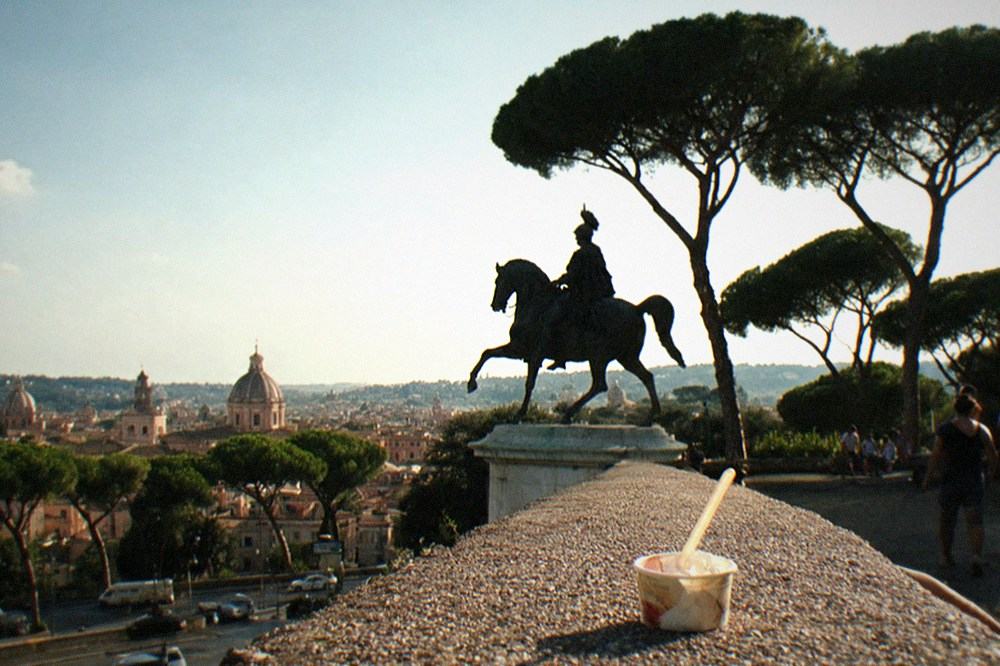
The Gianicolo
The Passeggiata del Gianicolo is the single most reliable free golden-hour position in the city. The belvedere at Piazzale Giuseppe Garibaldi faces west across Trastevere toward the dome of San Pietro, and the cannon below it fires daily at noon, a tradition that has run since 1904. In the evening the square fills with people and stays open because the park has no gate. The light catches the Fontana dell'Acqua Paola and the whole sweep of the Janiculum ridge, and the Garibaldi monument stands black against a gold sky while the city stretches all the way to the Alban Hills. This is also the viewpoint where tourists first notice that Rome's rooftops are a messy layered history of terracotta and satellite dishes, which looks beautiful in low raking light.
Terrazza Del Pincio
The Pincio is directly above Piazza del Popolo, inside Villa Borghese, so its access is tied to the park's dawn-to-sunset hours. It faces west and drops a long view over the twin churches, the via del Corso axis and the distant Monte Mario ridge. The water clock on the terrace is free to see, and in golden hour the white travertine turns a deep orange that no midday photo ever captures. Areti, Rome's grid company, runs about 11,425 artistic-monumental light points across the city and roughly 6,000 points of light on monuments, and the ones on the churches below switch on just as the golden hour ends, so the transition from natural to artificial light is part of the experience here. A free walk covers this ground: Bilingual Secrets Of Rome.
Giardino Degli Aranci
Parco Savello, the Orange Garden, sits on the Aventine with an opening-hours calendar that changes by season: 07:00-21:00 in April to August, 07:00-20:00 in March and September, and 07:00-18:00 from October to February. The view is not toward the Circus Maximus, which sits on the other side of the hill; it faces the Tiber, the Trastevere rooftops and the dome of San Pietro. The garden was laid out in 1932 by Raffaele de Vico on the site of the Savelli fortress, and the umbrella pines along the terrace entrance frame the dome in the same composition every evening.
The Aventine Keyhole
At the top of the Aventine, on the Piazza dei Cavalieri di Malta, the keyhole in the green door of the Villa del Priorato frames the dome of San Pietro at the end of a garden avenue. It is free to look through at any hour, and in the golden hour the avenue is a tunnel of light. The Order of Malta's own website has noted that Romans and tourists queue there at all hours of the day or night, and the only thing that changes with the clock is the colour of the dome at the end of the view.
How The Golden Hour Changes The City: Cobblestones And Cupolas
During golden hour the colour of Roman travertine shifts from a cool off-white to a deep amber, and the low angle of the sun throws long shadows from every street-level obstruction, which makes even familiar streets feel like new ones.
The sampietrini cobblestones in the centro storico are small black basalt cubes set in sand, and their surface becomes glossy when caught by low, horizontal light. In the narrow canyons of the Ghetto or around Piazza Navona, the sun finds alleys that are in shadow all day and lights them for ten minutes. The dome of Sant'Ivo alla Sapienza, a Borromini spiral hidden inside a courtyard, suddenly catches a sliver of gold that makes people stop. None of this costs a euro. One of the free walking routes passes through here: Caravaggio Mystery Walk, English.
At street level the golden hour also changes how the city's free-to-enter churches look from the outside. The façade of Santa Maria del Popolo faces west and the late sun hits its travertine directly. San Pietro's dome changes from a soft grey to a glowing copper colour, and the effect is visible from the Lungotevere, from the bridges and from every rooftop terrace that happens to be free to visit. Sant'Ignazio di Loyola, open until 23:30 daily, is the one major church you can walk into after the light has faded and still find a free illusionistic painted ceiling, which is a neat way to extend the golden-hour mood into the night.
| Landmark | Best free golden-hour angle | Public access status | Key source |
|---|---|---|---|
| Dome of St Peter's | From the Gianicolo or the Orange Garden | Free, unticketed viewpoints | Roma Capitale scheda-servizi |
| Santa Maria del Popolo | From the Pincio terrace above | Free within Villa Borghese hours | santamariadelpopoloroma.it |
| Fontana dell'Acqua Paola | From the Gianicolo belvedere | Free, sempre accessibile | Roma Capitale |
| Trevi Fountain | From the square after 22:00, free and lit | Free to observe from the piazza always | fontanaditrevi.roma.it |
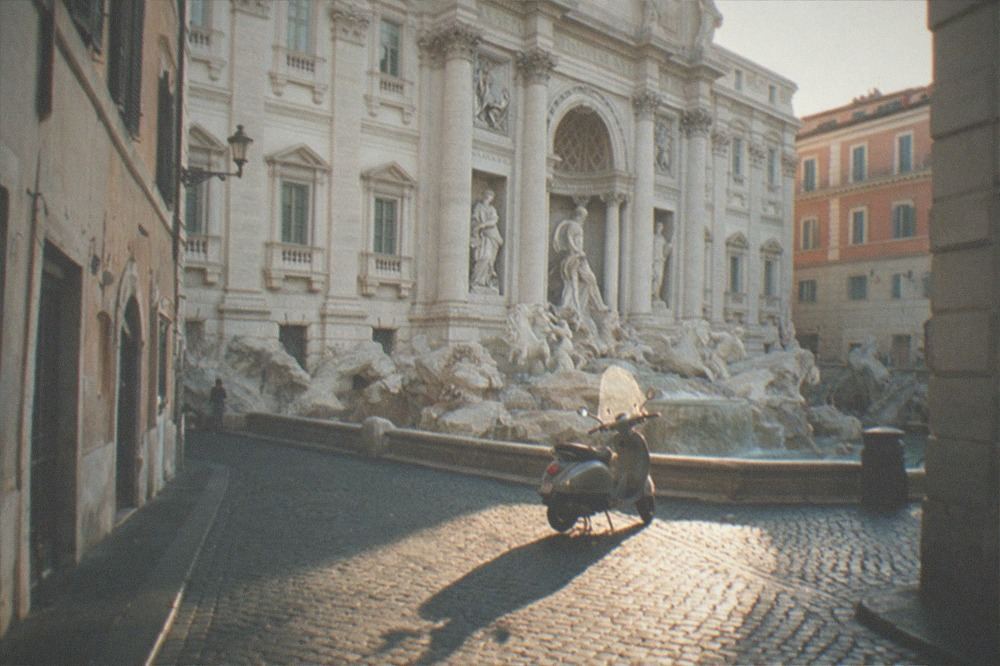
The Trevi Fountain is an instructive case: the inner perimeter costs EUR 2 for non-residents from 09:00 to 22:00, but after the ticket cut-off the fountain and the whole square remain visible for free. In golden hour the water catches the last direct sunlight, and by the time the floodlights turn on the light has shifted entirely to the warm end of the spectrum. It costs nothing to stand at the edge of the basin rail and watch that change. A free walk covers this ground: 11 Spots, 2 Hours 45.
Free Walking Tours That Make The Most Of Rome's Evening Light
Several free walking tours on GuruWalk start in the late afternoon or early evening and run into the twilight and beyond, making them a natural way to pair the golden hour with a guide's local knowledge of the city's stories.
The "Ghosts and Mysteries, Bilingual" walk meets at Lungotevere Castello, 50, just below Castel Sant'Angelo, and runs for an hour and a half in English and Spanish. Because it starts in the early evening, the first twenty minutes often happen in the tail end of the golden hour, with the fortress catching the sun behind the guide's shoulder. The route takes in the Ponte Sant'Angelo, the Borgo lanes and the darker corners of the centro storico where the stories shift from imperial history to the macabre. Rated 4.62 across 3,806 GuruWalk reviews, it is a pay-what-you-want walk that costs nothing to book and can be tipped what you think the evening was worth.
The "Bilingual Secrets of Rome" walk, meanwhile, gathers at Piazza Venezia, 16, and covers two hours in English and Italian. It starts slightly earlier and moves through the zone around the Fori Imperiali and the Capitoline Hill, which means the golden-hour light catches the travertine of the Vittoriano and the brick of the Forum at exactly the moment the monuments shift from sunlit to shadow-lit. Rated 4.84 across 398 reviews on GuruWalk, it is a smaller, less-crowded walk that often has its best stories right after sunset, when the floodlights on the imperial ruins turn on and the golden hour melts into blue hour.
Both walks are listed on GuruWalk, the platform that connects independent local guides with walkers who pay what they feel the tour was worth at the end, usually between 10 and 20 euros per person for a well-told story in excellent light. The same platform's Rome page notes that 35 participants per walk is a typical ceiling, though groups of four or five also happen (see Rome Trip Budget). Because these walks are free to join and simply ask you to tip after the event, they are some of the few evening activities in the city that genuinely cost nothing up front.
Photographing Rome During Golden Hour: A Few Numbers
In a city that counts about 11,425 artistic-monumental light points and roughly 6,000 individually lit features according to Areti, the grid company that runs the system, golden hour is not the end of the show but the start of a transition from one kind of illumination to another that lasts well into the night.
Areti, the ACEA group subsidiary that runs Rome's monumental lighting, reports that the entire artistic-lighting system uses LED, and in 2025 it installed 259 new projectors at the Mercati di Traiano with a total draw of about 7.5 kilowatts and intelligent control. That is the technical reason the imperial-forum ruins look as good at night as they do during the golden hour: the lights are tuned to a colour temperature not far from the natural twilight. One of the free walking routes passes through here: Colosseum Walk, Bilingual, 1 Hour 45.
The city's own tourist-arrival figures for 2025 give a feel for how many people you will share the viewpoint with: Rome recorded 22,965,222 arrivals and 52,920,135 overnight stays, an average stay of 2.3 nights. The Gianicolo belvedere, being sempre accessibile, absorbs crowds better than a gated garden, and the Pincio terrace has enough length that you can always find a quiet spot near the water clock if you walk past the selfie gauntlet.
The only practical golden-hour photography rule that can be verified from official sources is Villa Borghese's closing time: the gates lock approximately at sunset, so if you have walked in for the view, you have to walk out again the same evening. The same applies to the Orange Garden, where the seasonal hour cut-off is enforced by a staffed gate. The Aventine Keyhole has no gate at all and the queue is always self-regulating.
Common Questions About The Golden Hour In Rome
What is the golden hour and when is it in Rome?
The golden hour is the last sixty minutes before sunset, when the sunlight is soft, warm and shadow-lengthening. In Rome the exact clock time ranges from roughly 15:40 in December to around 20:00 in June, changing daily with the sunset. Rome's latitude at 41° 53′ N makes the effect more intense than in northern cities because the low-angled light covers the whole cityscape in a uniform honey-coloured wash.
Which free viewpoints give the best golden-hour light?
The Gianicolo belvedere is the most reliable, because Roma Capitale lists it as sempre accessibile with no gate. The Terrazza del Pincio in Villa Borghese, the Giardino degli Aranci on the Aventine and the Aventine Keyhole at Piazza dei Cavalieri di Malta are all free and offer framed views of the dome of St Peter's or the city centre. Every one of them faces roughly west.
Is the Trevi Fountain free to visit during golden hour?
Yes. The EUR 2 inner-perimeter ticket runs from 09:00 to 22:00, but the fountain and the entire square are free to observe from the pedestrian area at any time. After 22:00 the ticket gates close and the whole piazza is accessible day and night. The floodlights switch on as the last daylight fades, so the transition from gold to artificial light is visible without paying a cent.
Are evening walking tours free?
Several evening walks on GuruWalk are pay-what-you-want, which means the booking is free and you decide the fee at the end. The Ghosts and Mysteries walk and the Secrets of Rome walk both start in the early evening and run into the twilight, and neither costs anything to join. The typical tip for a well-guided two-hour evening walk is 10 to 20 euros per person.
Does Villa Borghese stay open through the golden hour?
Yes, the park's official hours are "aperto dall'alba al tramonto", open from dawn to sunset, so the gates lock approximately at the end of the golden hour. The Pincio terrace inside the park is covered by the same rule: you can stay until the light has faded and then leave through one of the seven named entrances.
What is the difference between golden hour and blue hour?
Golden hour is the warm, low-angled daylight directly before sunset. Blue hour is the cooler, soft twilight immediately after sunset, when the sun has dipped below the horizon but the sky still retains indirect light. In Rome the blue hour lasts roughly 25 to 35 minutes and is the moment the monumental floodlights first become visible against a still-blue sky.
For more free evening walks that take you through Rome's Free Things To Do In Rome without a price tag, see our free walking tours guide and the piece on whether these tours are worth your time.